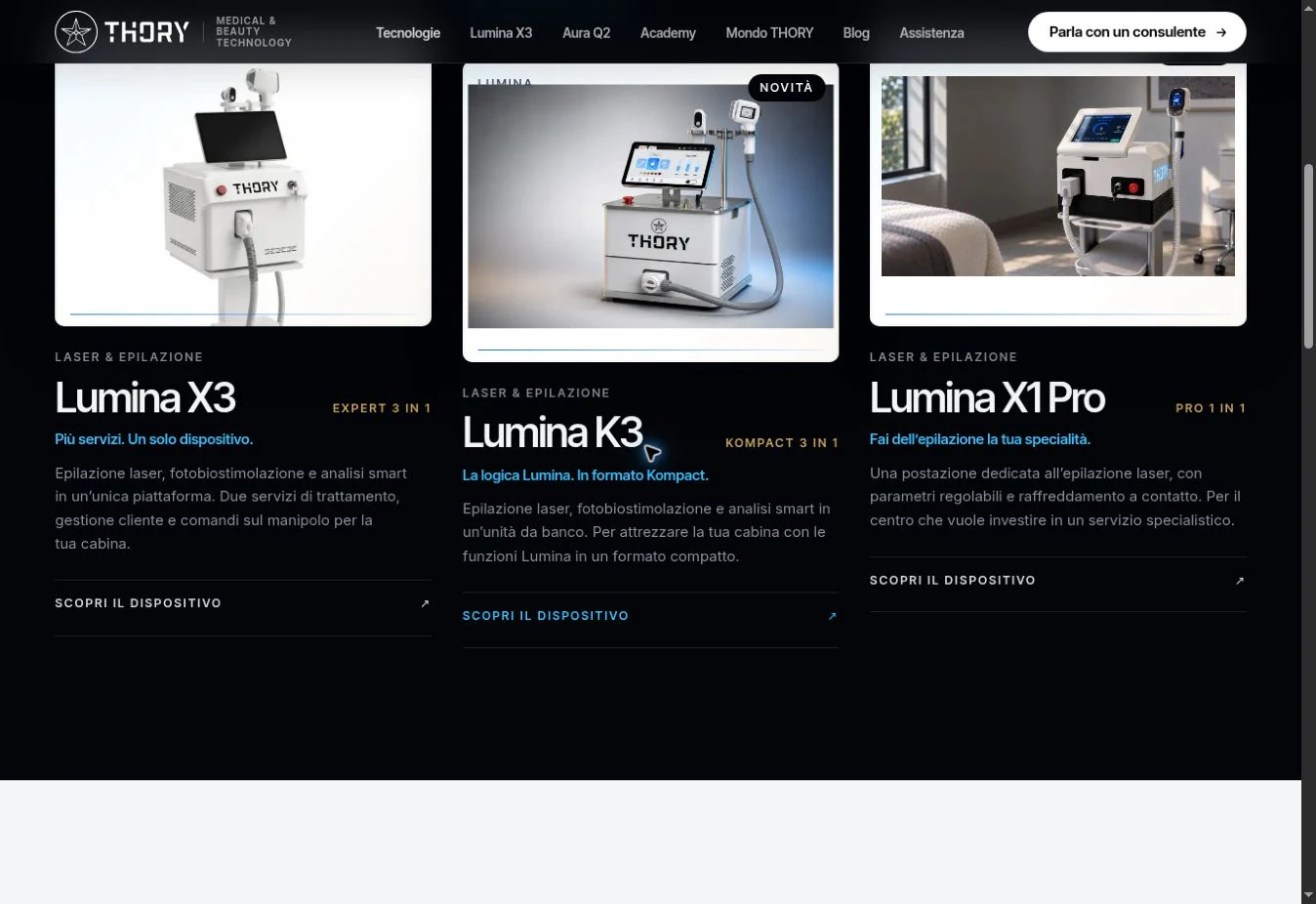
Brand → product story → digital experience
THORY Technologies
A technology range connected through identity, product imagery, comparison and a purpose-built website.
DOGO / Custom digital ecosystems
We connect brand strategy, custom websites, commerce, content and operational tools. Performance and search visibility shape the architecture from the start.
Custom by purpose. Not defined by a platform.
The work comes first
Explore the actual scope, interfaces and project materials behind these examples.
Brand → product story → digital experience
A technology range connected through identity, product imagery, comparison and a purpose-built website.
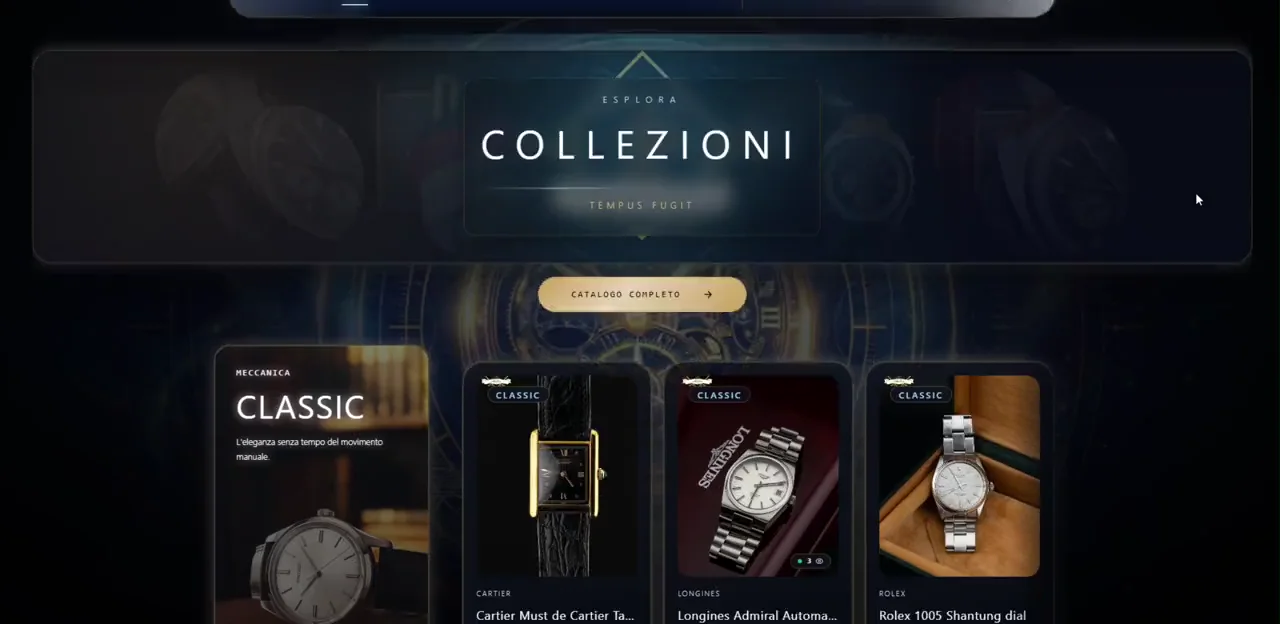
Collection → product detail → enquiry
A luxury catalogue with product-specific enquiries and specialist service content. Explore the implemented buying journey.
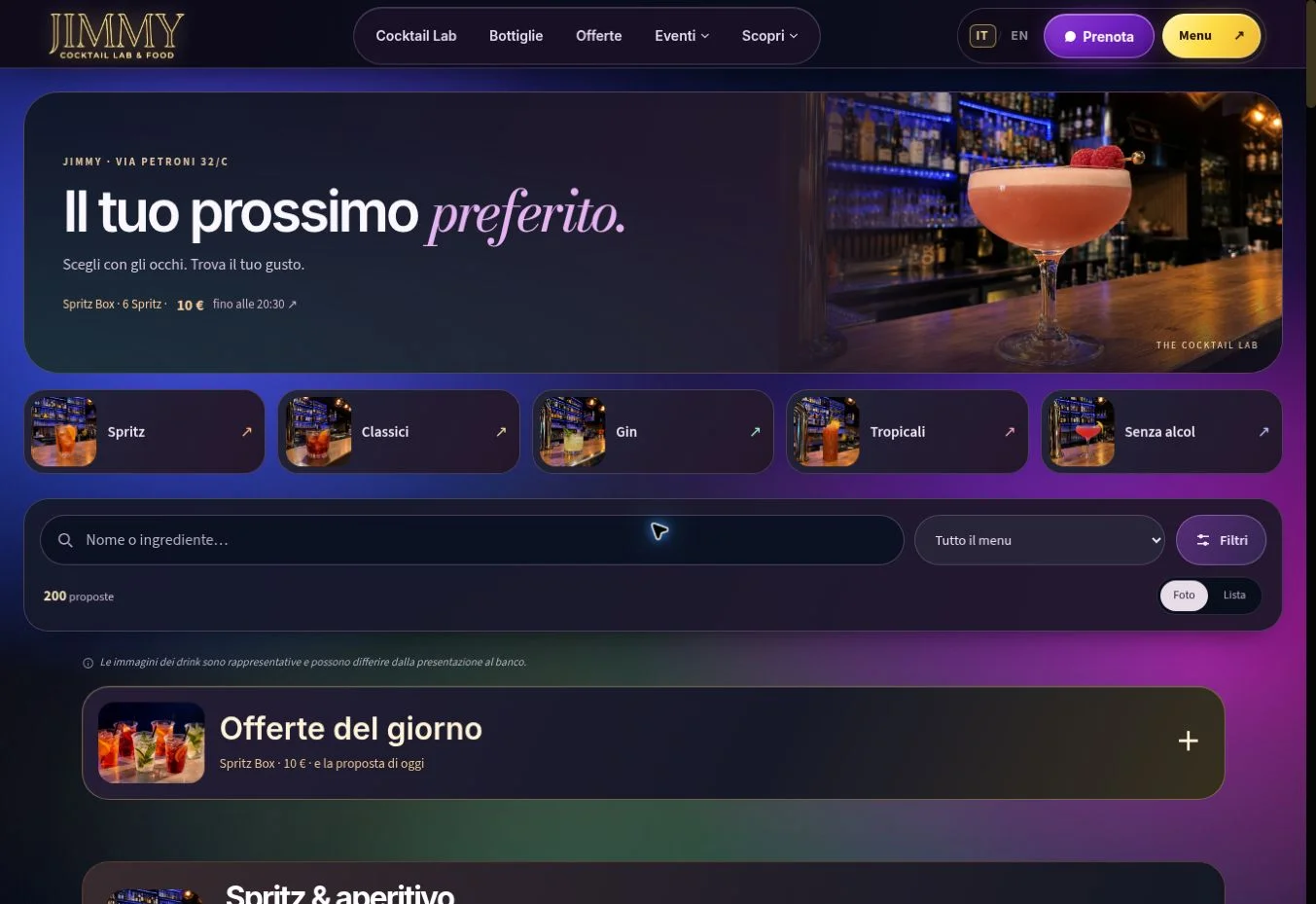
Product catalogue → discovery → mobile experience
A custom photographic menu, search and category navigation designed around how guests choose on a phone.

Knowledge → orientation → qualified enquiry
Training pathways, guides and a guided enquiry journey that start with the professional’s actual question.
One direction / Four connected layers
Start with the business and its customers. Connect only what makes the experience clearer and the operation more useful.
Positioning, identity, offer structure and product storytelling. A shared direction for the experience and the business behind it.
Custom websites, digital catalogues, storefronts and buying journeys. Headless commerce where the requirements justify it.
Content models, APIs, portals, dashboards, automation and live data. Interfaces and responsibilities agreed before implementation.
SEO, AEO and GEO considered while structuring content and templates—not left as a plugin to add after launch.
Commerce & custom platforms
A storefront is only one part of a buying journey. Product information, content, discovery, checkout and operations need to work together.
When you need a distinctive storefront, a rich product story or specific integrations, we scope the front end, commerce engine and content system as separate responsibilities. We do not force a brand into a platform-led proposition.
Use dependable services where they fit. Spend custom engineering on the experience, business rules and connections that matter. Define ownership, maintenance and operating costs before the architecture is approved.
For transactional or operational systems, discovery maps the data, roles and failure cases. An uncertain integration is tested before it becomes a fixed-price commitment.
Scope a commerce or platform project ↗GEO built into the architecture
Search is part of the product brief. The information people need should be useful on the page and accessible to the systems that help them find it.
Explore SEO, AEO & GEO ↗Clear product and service entities, original evidence, useful comparisons, connected pages and maintainable content models. Structured data reflects what visitors can actually see.
Responsive images, deliberate JavaScript, stable layouts and critical-journey testing are considered alongside the art direction. Performance budgets are agreed and tested; a framework name is not a performance result.
Record search visibility, available AI-search reporting, observed citations and actual enquiries separately. Being technically accessible does not guarantee indexing, rankings or an AI recommendation.
Our method builds on search fundamentals. Google’s AI-search guidance ↗ · Web Vitals guidance ↗
Ways to work together
Start with the part that needs to change. Expand the scope when the next connection has a clear purpose.
01 / Define
Clarify the offer, map the customer journey and resolve technical uncertainty. A focused decision document and implementation scope—not open-ended consulting.
02 / Build
A brand and website, a commerce experience, or a custom platform. A defined scope with responsibilities, milestones and acceptance criteria.
03 / Evolve
New content, campaigns, product journeys and technical improvements. Reserved capacity with a prioritised backlog; support and incident response scoped explicitly.
Before we start
A connected set of brand, content, customer-facing experiences and operational tools. A product can share its information across a website, a catalogue, an enquiry journey and an internal system without each becoming a separate design project. The useful connections depend on the business.
No. Headless separates a custom storefront from its commerce engine. We assess the required experience, integrations, content workflow, operating costs and maintenance before recommending it. The right architecture can also be simpler. A custom experience does not require rebuilding payments or every backend service.
It describes our delivery method: useful, original content; clear entities and product information; accessible pages; internal links; appropriate structured data that matches the visible content; and a measurement plan. It is not a platform certification or a guarantee that an AI service will mention your business.
Yes, subject to a technical review. We identify what should stay, the available APIs, data ownership, access requirements and integration risks. A focused prototype can validate an uncertain connection before a larger implementation is priced.
We agree representative templates, critical journeys, performance budgets and acceptance checks. Test conditions are recorded, and lab measurements are kept separate from real-user data. Transactional projects also need checks for failed payments, permissions, inventory consistency and recovery.
By the outcome, scope, production effort and delivery risk—not by the number of services on a list. Direction, implementation and ongoing operation are scoped separately. Existing launch packages cover marketing work; commerce engines, migrations, portals and complex integrations need their own scope.